
Whoa!
Solana moves fast and things get messy.
I like tools that cut through the noise without pretending everything is perfect.
At first glance a block explorer is just a lookup tool, but actually it’s the forensic lens you use when somethin’ odd happens on-chain.
Sometimes that lens is foggy, though, and you learn to squint differently.
Really?
Transactions look simple until you trace a token swap across five program accounts.
Most explorers show a surface view, which is fine for casual checking.
But when you need token provenance, mint authority history, or the exact instruction logs, you want depth.
Depth is where real trust starts, and where my patience either pays off or gets tested.
Wow!
I started using explorers like a detective notebook.
I jot addresses, compare block times, and watch patterns emerge over days.
That habit exposed several things that dashboards miss, like repeated tiny transfers that add up to a big behavior pattern.
It’s not flashy, but it’s the kind of on-chain muscle memory that pays dividends in troubleshooting.
Here’s the thing.
The token tracker features matter more than UI bells when you’re chasing a rug pull or following funds.
You need a clear token holder list, holder concentration metrics, and a simple way to export or copy the data for offline analysis.
Some explorers hide or burry the token holder details behind extra clicks, which drives me nuts.
A smooth token tracker should be obvious and immediate.
Whoa!
Solana’s architecture forces different explorer tradeoffs than EVM chains.
Blocks are smaller, transactions are denser, and a single slot can contain dozens of instructions touching multiple program accounts.
If an explorer isn’t optimized for that density, it becomes sluggish or misleading during high-throughput events.
Choosing an explorer that expects scale is not just preference—it’s practical risk management.
Seriously?
You want transparent instruction decoding when inspecting a transaction.
Knowing which program read which account, and seeing parsed instruction parameters, speeds trust-building.
Initially I thought raw logs were fine, but then realized parsed views are essential when you need to explain something to a client or a friend.
Parsing saves time and reduces mistakes, and that matters in the heat of a live incident.
Wow!
On-chain token trackers should show historical supply snapshots, not just current balances.
Seeing when supply changed, who minted or burned tokens, and which accounts were involved is crucial for audits.
When you can fold that timeline into holder concentration graphs you get a story, not just a spreadsheet.
Stories stick with people, and they surface risk patterns that cold numbers sometimes hide.
Really?
There’s a tradeoff between feature-richness and cognitive overload.
Too many charts and badges make the interface noisy very fast.
My instinct said simpler is better, but then I noticed I needed the extra charts for rare cases.
So actually, wait—let me rephrase that—good explorers give clean defaults while letting power users dig deeper.
Whoa!
I’m biased, but I prefer explorers that support quick CSV exports.
Being able to pull a holder list and analyze it in a spreadsheet is old-school, but it’s effective.
APIs matter too; automated tooling and alerts depend on a stable, well-documented API surface.
If an explorer’s public API is flaky or undocumented, you end up building fragile scripts that break during the worst moments.
Here’s the thing.
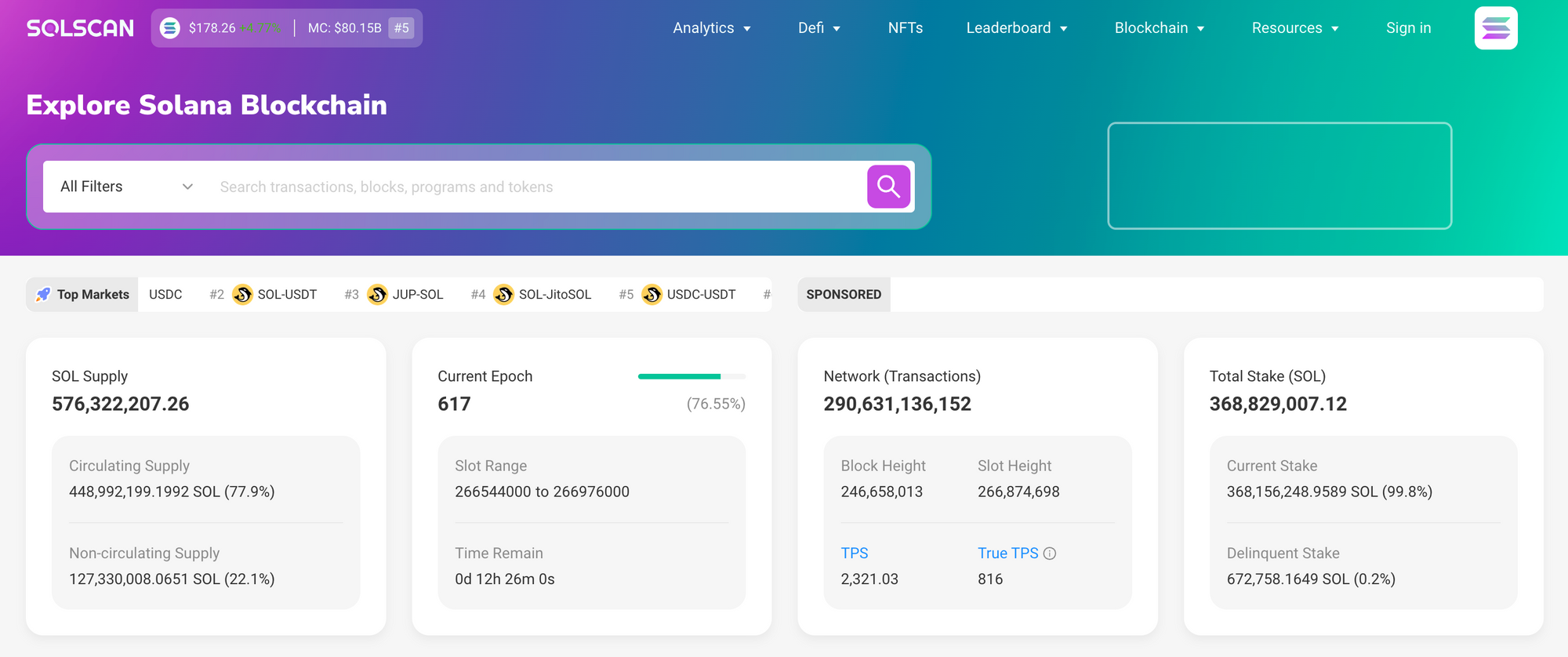
If you want a practical, reliable explorer for Solana work, try solscan for a hands-on feel.
It balances parsed instruction views with token tracker detail in a fast interface.
The token pages show holder distributions, mint history, and transaction examples without forcing you to click five times.
That saves time when you’re under pressure, and it reduces the “where did that come from?” moments that give you grey hairs.
Wow!
One feature that consistently helps is decoded program instruction history on a single transaction page.
You want to see spl-token transfers, memo notes, and CPI calls all in one scroll.
When explorers split that view across tabs you lose context, which matters when reconstructing a complex flow.
Context is the glue that ties events together and helps spot anomalies early.
Really?
Advanced users will want the ability to inspect inner instructions and CPI call chains.
Those chains explain how a simple UI action triggered five different program states.
I’m not 100% sure about every edge case, but I’ve used those traces to demonstrate why a swap failed or why a token transfer bounced.
They become evidence, plain and simple.
Wow!
Network health cues belong in the explorer too.
Seeing recent slot times, transaction per second spikes, and node errors helps you decide whether a weird behavior is network-related.
When dev tools hide those signals, you end up chasing the wrong rabbit.
A quick glance at uptime and health metrics can save hours.
Here’s the thing.
Wallet address pages that include recent transactions, token balances, and delegated stake positions are underappreciated.
I often follow a wallet’s activity to understand behavior—like whether it’s a bot, a team wallet, or a custodial address.
Those patterns inform risk assessments and guide whether to trust certain token movements.
Patterns beat one-off looks every time.
Whoa!
NFT pages should link to token metadata and show mint timelines in a readable way.
For collectors and devs alike, provenance matters; you want to see creator royalty settings and split payouts.
Some explorers show only on-chain metadata but fail to render the human-friendly breakdowns that collectors actually use.
That gap is annoying and easily fixable, but it still annoys me every single time.
Really?
Search functionality is underrated.
Being able to search by token symbol, partial address, or label saves time when you’re juggling multiple leads.
Labels and a public annotation system can be a force multiplier for community-sourced intelligence, though they need moderation.
Without good search, you end up bouncing between tabs and losing momentum.
Wow!
I’ve used explorers as teaching tools in workshops and hack nights.
Showing newcomers a live token mint and transfer on an explorer makes abstract concepts concrete.
It’s a simple demonstration but it sticks; people remember a tangible transaction more than slides full of terminology.
Teaching is a great stress test for a UI—if people can follow it, it’s usually well designed.
Here’s the thing.
Privacy-conscious users want clear indications about what data is public and how to minimize exposure.
Explorers could help by offering guidance on best practices, like using new addresses for sensitive operations or avoiding on-chain personal data.
I’m not a privacy maximalist, but this part bugs me when it’s left out entirely.
Even a small primer would be very very helpful for beginners.
Wow!
Mobile friendliness is a growth factor, not an afterthought.
I check a few transactions on my phone when I’m away from the desk, and cluttered mobile views frustrate me.
If you design for mobile, you win trust from people who manage wallets on the go, and you reduce accidental mistakes.
Simple responsive layouts make for fewer support tickets.
Really?
APIs for token tracking should offer pagination, filtering, and reliable timestamps.
Without consistent timestamps you can’t reconstruct events into a timeline properly.
My workflow depends on those guarantees, and when they’re missing I waste time reconciling records.
A robust API feels like a grown-up tool; flaky ones remind you of early-stage projects.
Wow!
Finally, I’ll admit there’s a learning curve.
I spent time learning to read instruction logs and decode program behavior, and that paid off when I needed to investigate real incidents.
Initially I thought tools would abstract everything away, but the truth is you still gain by understanding the plumbing.
That extra time invested in learning the explorer saved me more time overall when things went sideways.
Whoa!
Whoa!
How do I track a token’s holder distribution and mint history?
Start by pulling the token’s mint address and open the token page.
Look for holder concentration graphs and the chronological mint/burn entries listed on the page.
If available, export the holder list to CSV and sort by balance to see distribution quickly.
If you see a sudden supply change, inspect the mint authority and the transactions around that slot for context.
Really?
Can I rely on explorer labels and annotations for security decisions?
They help, but don’t rely solely on them; labels are community-sourced and can lag or be wrong.
Cross-check with on-chain proofs like mint authority transfers, instruction logs, and program IDs.
When in doubt, combine explorer data with RPC queries or a second explorer for confirmation.